Laughing Buddha / Hotei (布袋)
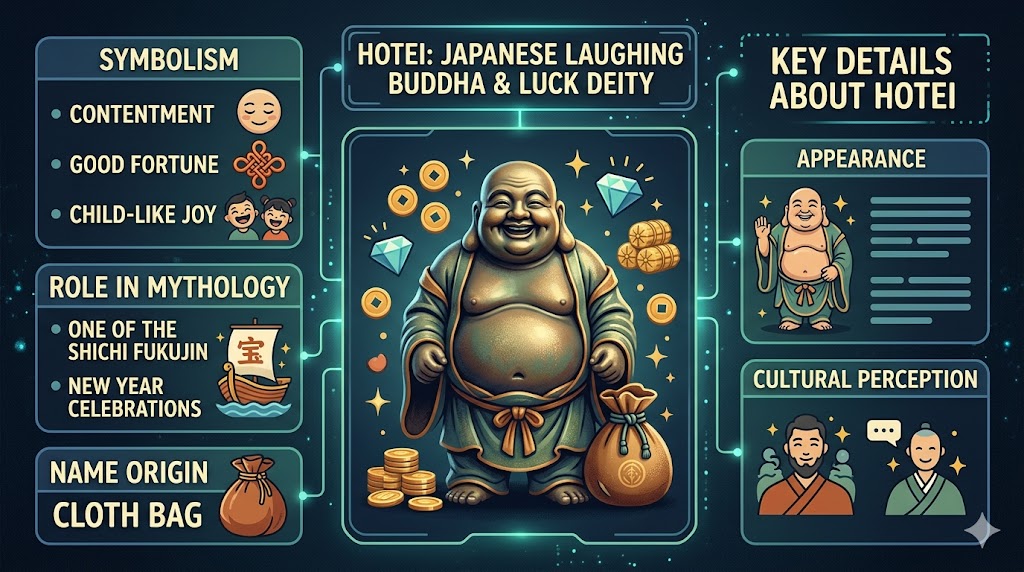
In Japanese culture, the "Laughing Buddha" is known as Hotei. While many in the West conflate him with the historical Gautama Buddha, Hotei is a distinct figure with deep roots in Japanese folklore and Zen Buddhism.
He is most significant as one of the Shichifukujin (Seven Lucky Gods), a group of deities believed to bring good fortune.
- Identity and Origins
- The Historical Figure: Hotei is based on a 10th-century Chinese Zen monk named Budai (or Pu-tai). He was known for being a cheerful wanderer who carried all his meager possessions in a large cloth sack (hotei in Japanese, which became his name).
- The Incarnation of Maitreya: In both Chinese and Japanese traditions, he is widely revered as an incarnation of Maitreya (Miroku Bosatsu in Japanese), the "Buddha of the Future" who will eventually return to Earth to achieve full enlightenment and teach the pure dharma.
- Cultural Symbolism
Hotei represents several key virtues in Japanese society:
- Contentment and Abundance: His large, protruding belly is not a sign of gluttony but a symbol of his "big heart" and his ability to swallow the world's troubles. Rubbing his belly is a popular folk tradition believed to bring good luck.
- Generosity: He is almost always depicted with his signature cloth sack, which is said to never empty. He uses it to hand out gifts, food, and fortunes to the poor and needy.
- Protector of Children: Hotei is frequently shown surrounded by happy children. He is considered a guardian of the young, embodying innocence and the joy of simple living.
- Presence in Daily Life
Because he is the god of happiness, popularity, and magnanimity, his likeness is everywhere in Japan:
- Business and Restaurants: Small statues (or netsuke figurines) are placed in storefronts and restaurants to attract prosperity and a "friendly" atmosphere.
- New Year Traditions: Hotei is often depicted on the Takarabune (Treasure Ship) along with the other six Lucky Gods. It is a tradition to place a picture of this ship under one's pillow on New Year's Eve to invite auspicious dreams.
- Zen Art: He is a favorite subject of Zen ink paintings (sumi-e), where his carefree, wandering lifestyle serves as a model for the Zen ideal of non-attachment and finding enlightenment in everyday joy.
Summary Table: Attributes of Hotei
| Feature | Symbolic Meaning |
|---|---|
| Large Belly | Abundance, magnanimity, and the "storage" of good luck. |
| Cloth Sack | A "bag of treasures" for the needy; it never runs out. |
| Ogi (Fan) | Sometimes carries a fan to signify authority or the power to grant wishes. |
| Laughing Face | Represents the Zen state of being unburdened by worldly stress. |
In Japanese history, the figure of Hotei (the Laughing Buddha) transitioned from a literal Chinese monk to a mythological pillar of Japanese folk religion. His significance is rooted in the fusion of Taoist, Buddhist, and Shinto beliefs.
Here is the historical breakdown of his evolution in Japan:
- The Transition from China to Japan
Hotei is modeled after the Chinese monk Budai, who lived during the Later Liang Dynasty (10th century). Stories of this eccentric, cheerful monk reached Japan alongside the arrival of Zen Buddhism (specifically the Rinzai and Soto schools) during the Kamakura period (1185–1333).
For the Japanese, Hotei became the ultimate "Zen deviant"—a figure who achieved enlightenment not through rigid scripture or silent meditation in a hall, but through laughter, wandering, and living in the present moment.
- The Formation of the Seven Lucky Gods (Shichifukujin)
The most significant historical milestone for Hotei occurred during the Edo Period (1603–1867).
- The Legend of Tenkai: It is said that the Buddhist monk Tenkai, an advisor to Shogun Tokugawa Ieyasu, selected seven deities to represent the essential virtues of a successful society.
- Hotei's Role: Hotei was chosen to represent Magnanimity (大量 - tairyō). By including him in this group, he was officially "Japanized," becoming a staple of the national identity rather than just a foreign Buddhist figure.
- Historical Artistic Influence
Hotei played a massive role in the history of Japanese art, particularly in Muromachi period ink wash paintings.
- The Zen Ideal: Famous painters like Sengai Gibon used Hotei as a recurring subject. These paintings weren't just for decoration; they were used as "visual koans" to help students understand the Zen concept of mushin (empty mind).
- Netsuke Carvings: During the Edo period, Hotei became one of the most common subjects for netsuke (miniature toggle sculptures). This allowed his "good luck" to be literally carried on the person of everyday citizens.
- Integration with Shintoism
Historically, Japan practiced Shinbutsu-shūgō (the syncretism of Buddhism and Shinto). Hotei is a prime example of this:
- He is often found in Shinto shrines despite his Buddhist origins.
- He was historically linked to the concept of Miroku Bosatsu (the future Buddha). In the late 19th century, during the Haibutsu Kishaku (a movement to abolish Buddhism), Hotei’s popularity was so deeply rooted in folk culture that he survived the purge, remaining a beloved figure in secular and Shinto contexts alike.
Key Historical Timeline
| Period | Significance |
| Kamakura (1185-1333) | Arrival in Japan via Zen monks; viewed as a symbol of non-attachment. |
| Muromachi (1336-1573) | Becomes a popular subject in sumi-e (ink painting) and secular art. |
| Edo (1603-1867) | Formally joined to the Seven Lucky Gods; becomes a symbol of household prosperity. |
| Meiji (1868-1912) | Survives the separation of Shinto/Buddhism to remain a cultural icon of "Japaneseness." |